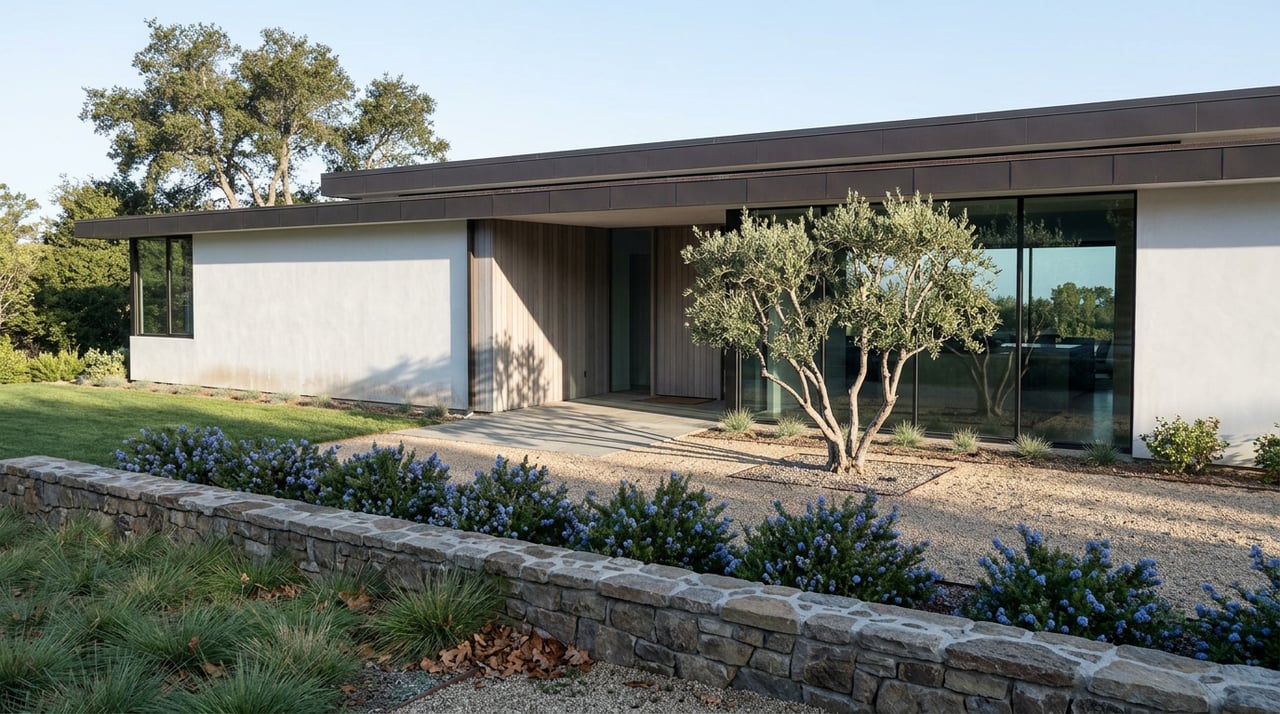
The New Dividing Line in the Berkeley Hills Has Nothing to Do With the View
"We actually have a fire station, literally a block and a half away."
— A Grizzly Peak homeowner, quoted by United Policyholders
The homeowner was dropped anyway, with slope, vegetation, and a third-party fire risk score he'd never heard of before the non-renewal letter cited as reasons. He wasn't wrong about the fire station. He was just discovering that proximity to one no longer decides who gets to keep coverage in the Berkeley hills.
That's the part buyers comparing Berkeley to other East Bay neighborhoods usually miss. The old assumption was simple: hills cost more because of the view, the privacy, the schools, the lot size. All still true. But there's a second number now sitting underneath the list price, and it doesn't track with any of those things in a straight line. It tracks with whether an insurer will write the policy at all, and that line runs through the hills at a much finer grain than "hills versus flats." It runs street by street, sometimes house by house.
California's FAIR Plan, the state's insurer of last resort, publishes residential policy counts by zip code once a year. Berkeley's most recent count, as of September 30, 2025, shows how unevenly that reliance is spread across a city of roughly ten square miles:
| Zip Code | Area | FAIR Plan Policies |
|---|---|---|
| 94708 | Berkeley Hills, Kensington | 691 |
| 94705 | Claremont, Elmwood | 451 |
| 94707 | Westbrae, Thousand Oaks, Northbrae | 376 |
| 94704 | Downtown-adjacent | 133 |
| 94703 | South Berkeley | 124 |
| 94709 | North Berkeley | 86 |
| 94702 | West Berkeley | 67 |
| 94710 | West Berkeley flats | 41 |
That's not a gentle slope. It's a cliff. A home in 94708 is roughly seventeen times more likely to be carrying FAIR Plan coverage than one four zip codes away in 94710. And because FAIR Plan policies are fire-only, most of those hillside owners are also paying for a second policy, a Difference in Conditions wrap, just to get back to the liability, theft, and water damage coverage a standard homeowners policy includes automatically. That second policy typically runs another 25 to 60 percent on top of the FAIR Plan premium.
Here's the detail that should reset how anyone reads a Berkeley listing: CalFire's 2025 Fire Hazard Severity Zone update actually shrank the amount of land classified as high-hazard across the urban East Bay hills. Berkeley looked at that same map and designated additional local high-hazard areas anyway. The city is being more conservative about its own hills than the state is. If you're comparing a Berkeley hillside property to a similar one in a neighborhood without that added local layer, you're not just comparing prestige and price. You're comparing two different regulatory environments.
Three things shifted in 2026 that make this the year to actually check before you write an offer, not after.
First, the statewide freeze on wildfire-related non-renewals has expired, and insurers are moving fast in affected zip codes. Satellite and aerial imagery, once an occasional spot check, is now a routine first pass for renewal decisions. If your roof looks different in a photo than it did in an underwriter's file, that alone can trigger a review.
Second, the FAIR Plan changed shape. Its coverage limits and eligibility expanded, which sounds like relief for owners who couldn't get coverage anywhere else. It was relief, and it also filled the plan with more exposure. That same filing raised rates by an average of 29.1 percent, approved by the California Department of Insurance and taking effect October 15, 2026, three weeks from today. The commissioner reportedly trimmed the FAIR Plan's original request, which would have been closer to 80 percent without the state's newer reinsurance-cost reforms, so the number that lands in October is already the reduced version. Higher-risk policyholders, meaning most of the Berkeley hills, are expected to see increases above that average.
Third, the state is trying to pull private carriers back in through what regulators call the Sustainable Insurance Strategy: insurers get to use forward-looking wildfire models and factor in their own reinsurance costs, in exchange for committing to write a growing share of their business in distressed areas. As of a July 2026 Department of Insurance update, eleven homeowners insurance groups and two commercial groups had signed on, and Farmers rejoined the market in May 2026 with a pledge to reach 300,000 policyholders in high-risk areas. FAIR Plan growth did slow in the first quarter of 2026, adding roughly 16,000 new residential policies compared to 35,000 to 50,000 per quarter in prior years. That's a sign the market may be stabilizing. It is not a sign that it's gotten cheaper.
On top of the state's changes, Berkeley added a local one. The city's EMBER initiative, short for Effective Mitigations for Berkeley's Ember Resilience, took effect as part of the local fire code on January 1, 2026, with enforcement beginning in June and a 60-day correction window before fines apply. It targets the specific mechanism that turns embers into structure fires: vents, eaves, decks, and the five-foot zone immediately around a home.
The first enforcement tier covers roughly 1,400 properties in the Grizzly Peak and Panoramic Mitigation Areas, out of more than 9,000 parcels in the broader high-hazard zone citywide. If you're looking at a home east of Grizzly Peak or on Panoramic, the zero-clearance requirement isn't a future consideration. It's a current obligation, and a seller who hasn't addressed it is handing the next owner a task with a deadline attached.
There's a real upside buried in this. Under the state's Safer From Wildfires regulation, participating insurers have to offer discounts across twelve documented mitigation categories, and According to Latent Insure, a program launched in November 2025 offers up to 16.4 percent off the wildfire portion of a premium when all twelve are completed and documented. Buyers rarely ask sellers for this paperwork. They should. A binder of completed hardening work, ember-resistant vents, a Class-A roof, a maintained defensible space, can be the difference between qualifying for admitted-market coverage and landing on the FAIR Plan by default.
The friction here doesn't wait for a homeowner's annual renewal notice anymore. It's showing up mid-transaction. Lenders financing hillside purchases, particularly on jumbo loans, are increasingly asking for a confirmed insurance binder at replacement cost before they'll issue a final loan commitment, not just before closing. A buyer who assumes insurance is a formality to sort out later can find that assumption costing them the deal in the final stretch.
On the seller side, an insurer's non-renewal history is important to consider in 2026. A seller who's been dropped by a carrier, or who's currently on the FAIR Plan and hasn't mentioned it, is sitting on information a buyer needs before they write an offer, not after they've opened escrow.
This is exactly the kind of detail that belongs in a listing's preparation, not its surprises. A hillside seller who pulls together mitigation documentation, current insurance status, and a realistic replacement-cost estimate before going to market isn't just avoiding a disclosure problem. They're handing a buyer's lender something to work with on day one.
None of this makes Berkeley's hills a bad place to buy. It makes the comparison different than the one most buyers are running. A lower FAIR Plan concentration in a flatland zip code like 94710 doesn't mean insurance is free there either, statewide premiums are up across the board, but it does mean a buyer is choosing from a wider set of admitted carriers rather than defaulting to the state's insurer of last resort plus a DIC wrap.
If you're comparing a hillside property against something in the flats, or against a similar hillside home in Oakland or Orinda, the honest version of that comparison includes a quote, not just an estimate. Get one before you're emotionally attached to a specific street.
A few questions that come up often:
Does living in the flats mean I can skip this entirely? No, but the odds shift. Zip codes like 94710 and 94702 show a fraction of the FAIR Plan reliance that 94708 does, which generally means more admitted-carrier options and less dependence on a fire-only policy plus a wrap.
How fast can I actually get an insurance quote before writing an offer? FAIR Plan applications typically process in five to ten business days, and adding a DIC policy takes longer. Starting the conversation with a broker before you're in a multiple-offer situation gives you a real number instead of a guess.
Insurance used to be paperwork you handled after the champagne. In the Berkeley hills in 2026, it's part of deciding which offer to write in the first place. Our team has spent decades reading the fine print that separates a smooth Berkeley closing from a stalled one, and we'd rather walk you through the insurance conversation in week one than watch it surface as a surprise in week five. If you're weighing a hillside purchase or preparing one to sell, The DiMaggio Betta Group is a good place to start that conversation. Get in Touch.
This article is general information, not legal, tax or financial advice. Consult a qualified professional about your situation.
Stay up to date on the latest real estate trends.

Over and over again, that has been my experience
At DiMaggio Betta Group, luxury isn't defined by a price tag—it's defined by the level of service every client receives. We combine decades of experience, innovative marketing, and personalized strategies to ensure every property receives maximum exposure and every client enjoys a seamless, results-driven experience. Whether you're buying, selling, or investing, we're committed to exceeding expectations at every step.

DIMAGGIO BETTA GROUP
Mobile & Office: (510) 414-6777
DiMaggio Betta Group | Corcoran Icon Properties
CA DRE# 01047447
ADDRESS
342 HIGHLAND AVE
PIEDMONT, CA 94611